
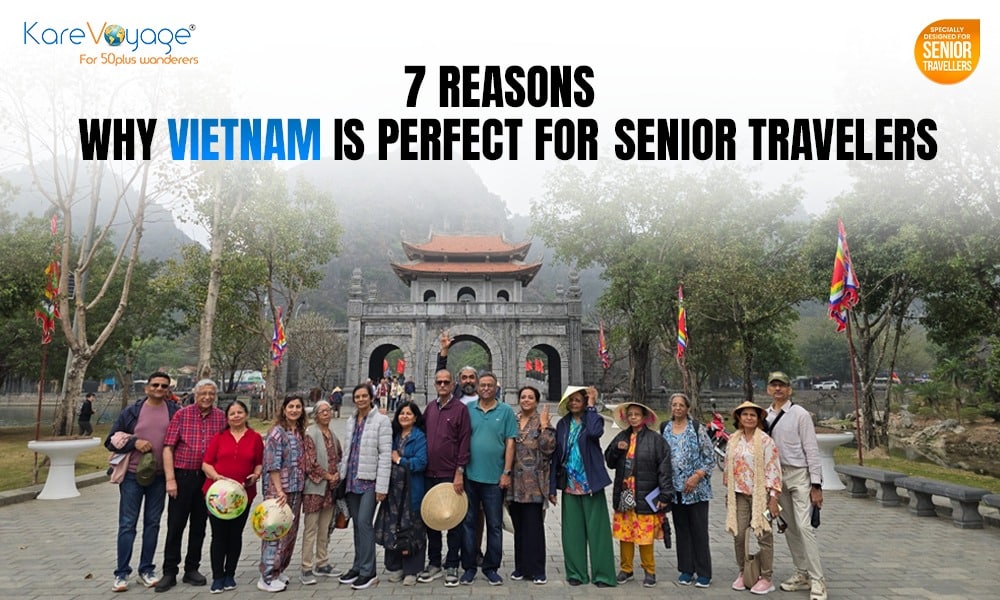
After 50, a great international holiday is rarely about ticking off as many attractions as possible. Senior tour packages need to offer a comfortable pace, meaningful experiences, easy opportunities to rest & enough variety to keep every day interesting. Travellers want to see a new country without spending their entire trip dealing with exhausting transfers, steep climbs or tightly packed schedules.
Vietnam, however, brings an interesting twist to this idea. A single trip can take you from ancient temples and historic streets to limestone landscapes, quiet waterways & overnight cruises – with fascinating food and living traditions along the way. You can spend one day soaking in history and another simply enjoying the scenery at a slower pace. So, what is it about Vietnam that makes this balance of discovery and comfort work so well for senior travellers? These seven reasons reveal the answer:-
1. Vietnam lets you see a lot without making every experience physically demanding
One of ‘Vietnam’s’ biggest strengths is the range of experiences that can be enjoyed without turning the holiday into an endurance test. Not every memorable sight requires long walks or strenuous activity.
Ninh Binh is a good example. The scenic waterways and Tam Coc Caves allow travellers to experience its striking limestone landscapes at a relaxed pace. Bich Dong Pagoda adds a cultural element – with the ancient cave pagoda nestled among the limestone hills. Together, these experiences offer a refreshing change from busy city sightseeing.
Ha Long Bay brings a similar advantage. The UNESCO-listed Ha Long Bay-Cat Ba Archipelago covers 65,650 hectares and includes 1,133 islands and islets shaped by limestone geology and marine erosion. Much of the experience happens from the water, allowing travellers to enjoy the scenery from a cruise rather than spending the day walking between attractions.
Of course, Vietnam is not entirely effortless. Titop Island, cave visits and some pagodas involve steps, while getting on and off boats may require balance or assistance. The important thing is to consider the physical demands of individual activities rather than assuming every attraction will be easy.
That balance becomes even more valuable when sightseeing is paired with something many senior travellers appreciate just as much as activity: the chance to connect with a destination through its history.
2. Its history is experienced, not simply displayed in museums
Senior travellers who enjoy history can find Vietnam especially rewarding because the country’s past is visible in its streets, temples, buildings and landscapes
Hanoi introduces several layers of Vietnamese history. The Temple of Literature, associated with Confucian learning, offers an opportunity to understand the country’s scholarly traditions – while the Imperial Citadel of Thang Long reflects centuries of political history.
The experience changes completely in southern Vietnam. The Cu Chi Tunnels reveal how warfare was conducted underground – with an extensive network of tunnels, bunkers, storage areas, medical facilities and other spaces. Vietnam’s tourism authority describes the network as extending for about 250 kilometres.
For many older travellers, this history can also feel personally familiar. The Vietnam War was a major part of international news and popular consciousness during the 1950s, 1960s and 1970s – so visiting places connected with that period can give greater context to events they may have encountered through newspapers, television or history books.
Some parts of the tunnels are physically restrictive – so travellers with mobility concerns should not assume that entering every tunnel section is necessary. The historical experience can still be meaningful through the above-ground exhibits, explanations and preserved structures.
Yet Vietnam’s story is much bigger than war and political history. Its centuries of trade, craftsmanship and cultural exchange are equally visible in the places travellers encounter today.
3. Vietnam has an unusually strong mix of culture, architecture and everyday life
Cultural travel becomes more interesting when the culture is still part of ordinary life.
Hoi An demonstrates this particularly well. UNESCO describes the Ancient Town as an exceptionally well-preserved example of a Southeast Asian trading port that was active between the 15th and 19th centuries. Its architecture reflects Vietnamese, Chinese, Japanese & later European influences.
Walking through Hoi An, therefore, is not simply a matter of looking at old buildings. The street plan, houses, temples, assembly halls, riverfront & traditional crafts tell the story of a trading town where different communities interacted for centuries.
The lantern tradition adds another layer. Lanterns have been made in Hoi An for more than 400 years, while candle-lit lanterns are placed on the river on the 14th day of the lunar month as a spiritual offering.
These experiences also bring a welcome change in pace. Instead of rushing from one major landmark to another – travellers can spend time observing the architecture, exploring traditional streets, enjoying local food or taking a boat ride along the Hoai River.
And Hoi An is only one part of the picture. Move across Vietnam’s map and the surroundings, atmosphere and even weather begin to change dramatically.
4. The country’s geography creates variety without requiring several separate holidays
Vietnam’s long, narrow geography packs remarkably different landscapes and climates into one country. A single journey can take senior travellers from the historic streets of Hanoi and limestone scenery of Ninh Binh to the waters of Ha Long Bay, the heritage of Hoi An and the bustling streets of Ho Chi Minh City.
The weather changes from region to region, too. Northern Vietnam is particularly pleasant in October, when Hanoi generally experiences cooler temperatures – while Ha Long Bay can offer comfortable conditions and clearer skies. September and October are among the favourable months for visiting Ha Long Bay.
Central Vietnam follows a different pattern, with Hoi An entering its wetter season around September. October can therefore bring showers and occasional storms, making some flexibility useful when planning activities there. Further south, Ho Chi Minh City remains warm and humid – with rainfall possible during the monsoon season.
For senior travellers, this makes the travel month an important consideration. October works particularly well for the northern highlights of this journey, while the itinerary allows travellers to experience Central and Southern Vietnam as part of the same trip.
That regional contrast is one of Vietnam’s biggest attractions. It means the journey does not have to be a constant parade of similar sightseeing stops. The experience itself keeps changing.
5. Vietnam offers plenty of ways to enjoy the destination without constant sightseeing
Seeing more does not necessarily mean doing more. Vietnam offers experiences where travellers can remain comfortably settled while the surroundings become part of the attraction.
The Ha Long Bay cruise is perhaps the clearest example. Travellers can watch limestone islands and changing scenery from the water, enjoy meals on board and have time for leisure without constantly moving between attractions. Ninh Binh offers a similar sense of discovery through its scenic waterways and caves.
Hoi An provides another kind of slower experience. After exploring its historic centre – travellers can take time around the riverfront, browse traditional crafts or enjoy an evening boat ride on the Hoai River rather than filling every hour with another sightseeing stop.
This kind of variety matters because a memorable senior citizen international tour package is not measured by the number of places visited. A well-paced day can include one active experience followed by time to sit, observe and enjoy the surroundings.
Once the sightseeing itself is balanced in this way, the next practical consideration is how comfortably travellers can move between Vietnam’s widely separated regions.
6. Getting around Vietnam can be planned around comfort rather than one mode of transport
Vietnam’s size makes transport an important part of the travel experience. Fortunately, the country offers several ways to connect its major destinations – including domestic flights, road transport and boats.
For a multi-region journey, domestic flights can be particularly useful. Flying between Hanoi, Da Nang and Ho Chi Minh City avoids turning every long-distance connection into a lengthy road journey – while comfortable coaches can handle shorter transfers between hotels and attractions.
The cruise through Ha Long Bay adds yet another dimension, because transportation and sightseeing become part of the same experience.
There are still practical details worth checking. Traffic in major cities can be busy, pavements are not always convenient for long walks and some heritage areas have uneven surfaces. Airport transfers, hotel locations and luggage handling can therefore make a noticeable difference to overall comfort.
This is why the best-planned journeys do not treat transport as something that happens between the attractions. It is part of the holiday itself.
7. Vietnam gives senior travellers enough variety to build a holiday around their own interests
Perhaps the strongest reason is the sheer range of ways to experience the country.
A history enthusiast can spend time around Hanoi’s monuments & learn about the country’s wartime past. A nature lover can see limestone karsts from the waterways of Ninh Binh or Ha Long Bay. Someone interested in architecture can spend hours in Hoi An. Food lovers can experience regional Vietnamese cuisine – while travellers interested in everyday life can observe crafts, markets and village traditions.
Even the same destination can offer different levels of activity.
Ba Na Hills, for example, combines the famous Golden Bridge with gardens, religious sites & the French Village. Travellers who enjoy walking can see more – while others can visit a few places and take more time to rest.
This flexibility matters after 50. Every senior traveller has different interests, energy levels & travel needs. Some may enjoy long walks – while others may prefer shorter sightseeing with regular breaks. Vietnam can suit both when the trip is planned around the traveller.
What senior travellers should keep in mind before visiting Vietnam
A comfortable Vietnam holiday package for senior citizens is about more than the places on the itinerary. A few practical choices can make the journey easier, more relaxed and enjoyable. So, here is what senior travellers should look for:-
- Look for an itinerary that gives you enough time to enjoy each region. A nine-day journey covering – Hanoi, Ninh Binh, Ha Long Bay, Hoi An & Ho Chi Minh City – can offer plenty of variety but the schedule should still leave room for rest between sightseeing & travel
- Consider the accommodation as well. After a full day of sightseeing – a comfortable 4-star hotel can make it easier to rest and recharge before the next day’s activities
- Choose transport according to the distance you need to cover. Domestic flights between Hanoi, Da Nang and Ho Chi Minh City can save considerable overland travel time – while comfortable coaches make shorter road transfers more manageable
- Check what is included before comparing trips. Entrance fees, local guides, airport and hotel transfers, meals and visa assistance can remove several practical arrangements that otherwise have to be handled separately
- Keep meal arrangements in mind – especially on a multi-day international trip. Having a mix of familiar Indian food & local Vietnamese cuisine can make meals easier for travellers who prefer some familiarity while still wanting to experience the destination
- Look for activities that offer choice rather than pressure. A cruise can include relaxed sightseeing, while activities such as kayaking or hiking to the Titop viewpoint can remain optional. This allows travellers to enjoy the same destination according to their comfort level
- Check the travel protection available with the trip. Travel insurance can be particularly useful for older travellers, although the coverage and age-related premium conditions should always be understood before departure
Vietnam becomes more enjoyable when the journey is planned for the traveller
After 50, life finally gives you more freedom to travel, explore & enjoy the experiences you may have been postponing for years. Age should not mean giving up on international adventures. It simply means choosing them with greater thought for comfort, health and pace. For anyone considering a holiday package for senior citizens, Vietnam brings together history, nature, culture and memorable experiences in a way that can be planned around these needs.
At KareVoyage, we understand that a wonderful senior holiday is a lot more than just ticking destinations off a list. With our 10+ years of experience in curating travel experiences for travellers above 50 – we plan journeys around comfortable accommodation, convenient transfers, balanced sightseeing, suitable meals and time to unwind. Our Vietnam journey brings together the country’s most distinctive regions while keeping the overall experience organised and comfortable.
You have spent years taking care of everything else. Now, it is time to make some memories of your own. Let us help you travel ‘Vietnam’ with comfort, curiosity & confidence.